
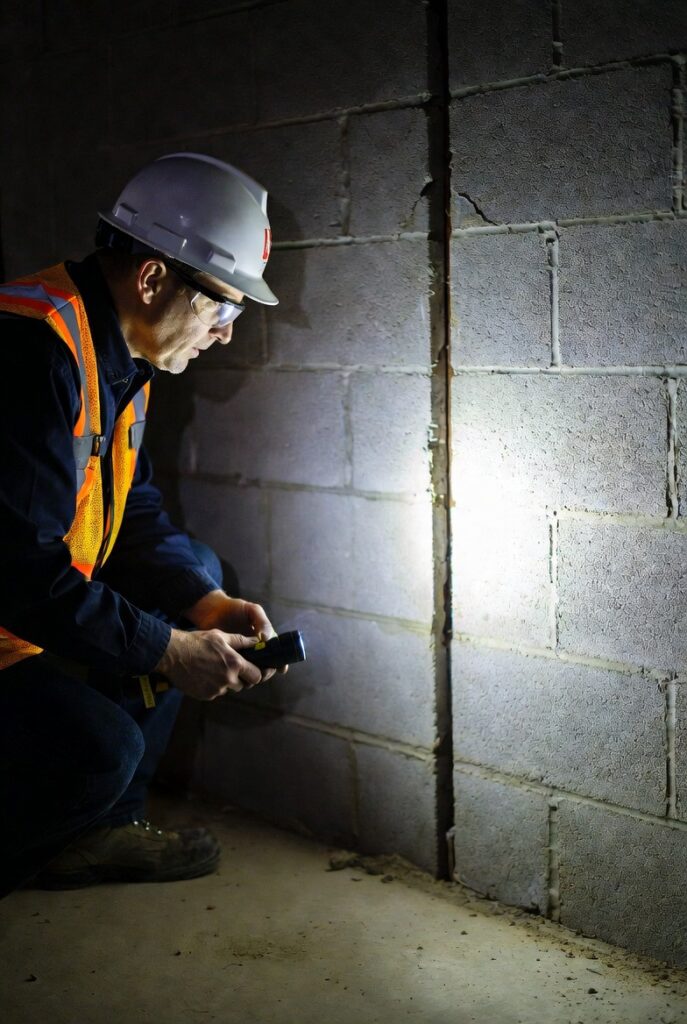
Thin, vertical hairline cracks in poured concrete are common as concrete cures and are often cosmetic. Others are genuine warning signs. Knowing the difference is what a structural engineer is for.
Signs a crack may be serious
- Horizontal cracks in a foundation wall (can signal soil or water pressure).
- Stair-step cracks in block or brick foundations.
- Wide cracks (about a quarter-inch or more) or cracks that keep growing.
- Bowing, leaning, or bulging walls.
- Doors and windows that suddenly stick, or sloping floors, alongside cracking.
- Water intrusion following a crack line.
If you’re seeing any of these, have them assessed before they worsen — early diagnosis is almost always cheaper than a delayed repair.
What a Lebra inspection covers
A licensed engineer evaluates the foundation and the conditions causing the cracking, tells you whether it’s cosmetic or structural, and — with the written option — provides a signed report for a repair contractor, a home sale, or an insurer. Pricing is transparent: $800 for the on-site walk-through and $1,500 for a written, stamped report. See our structural inspections and damage inspections.
Buying or selling a home?
An independent, licensed structural opinion can settle a negotiation quickly and keep a deal moving — it carries weight a general inspection often doesn’t.
Have a project that needs a licensed engineer?
Send us your scope and we will come back with a written proposal — typically within 1 business day.